
Roof Replacement With Solar Panels
One company for the roof and the array. One quote, one schedule, one warranty.
Roofing and solar crews in-house
Roof warranty stays intact
Two-week typical turnaround
Central & western Virginia
Most roofers quote the roof and leave the panels to you
Your roof is at the end of its life and there’s an array bolted to it. Most roofing companies quote the roof and tell you to sort out the panels yourself.
Then you spend three weeks trying to reach a solar company, and once you find one you’re managing two crews and two schedules that don’t talk to each other.
We do both. Same company, same calendar, same job file.
Can You Replace a Roof With Solar Panels on It?
Not with the panels in place. The array has to come off.
There’s no way to tear off, dry in, and reshingle a roof plane with modules and rail bolted to it. Any roofer who says otherwise is planning to work around them, and you’ll get a roof that fails early at exactly the spots you can’t see.
So the question isn’t whether the panels come off. It’s who takes them off, and how well that crew talks to the roofing crew.
What It Costs
| Line item | How it's priced | Typical |
|---|---|---|
| The roof | Square footage, pitch, layers, decking, material | Quoted on site |
| Detach & reset | Per panel | $250 – $300 |
| Steep or complex array | Per panel | up to $350 |
On a 20-panel system, budget roughly $5,000 to $6,000 on top of the roof.
That second line is the one people don’t budget for. Worth knowing before you collect three roofing quotes that all quietly exclude it.
We'll quote the roof and the detach together, so you're not chasing two estimates.
How the Two Crews Sequence It
STEP 01
Detach
One or two days ahead. Solar crew pulls modules, rails, and electrical.
STEP 02
Attachments stay in
Left in the roof until tear-off, so nothing is left open.
STEP 03
Roof goes on
Tear-off, deck inspection, underlayment, shingles.
STEP 04
Three to four days to settle
Nobody walks a new roof right away.
STEP 05
Reset & recommission
Array back on new flashing, rewired, tested, producing.
About two weeks when weather and material orders cooperate. Split across two companies, add half a week to a week. We’ve had jobs where we did the detach, the homeowner used another roofer, and the panels sat on pallets nine days waiting on a callback.

Why the Attachments Stay In Until Tear-Off
Roof attachments are lag-bolted through the decking into rafters and flashed in. Pull them when the panels come off and you’ve left forty open penetrations in a roof about to sit through a night of weather.
Our roofing crew pulls them as they tear off that section, and new flashing goes down behind them the same day. It’s a small sequencing detail and it’s the thing that most often goes wrong when two companies are involved.
Your Roofing Warranty Stays Intact
When one company does the roof and puts the solar penetrations back through it, the warranty covers the whole assembly. One party is responsible and there’s no argument about whose work caused a leak.
Split the job and it gets murky. If another solar contractor drives attachments through our new roof, we’re not warrantying penetrations we didn’t make.
It cuts both directions. If another roofer does the roof and our solar crew comes back to reset, we inspect that roof first. If the workmanship isn’t up to standard we’ll still reset your system, but we won’t warranty the penetrations we put through it. We tell people that before the job, not after a leak.
How Old Should Your Roof Be Before Solar Goes Back On?
Ten years or less is ideal. A roof under ten will outlast the equipment sitting on it.
If your roof is 20 years old and you’re thinking about resetting the array instead of replacing the roof first, we’ll be straight with you: odds are good you’ll have a leak before the solar equipment warranty runs out, and by then there’s an array in the way of fixing it. Some homeowners go ahead anyway. That comes with a signed waiver on the penetration warranty.
The cheapest moment to replace a roof under solar is while the panels are already off for another reason. The second cheapest is now.
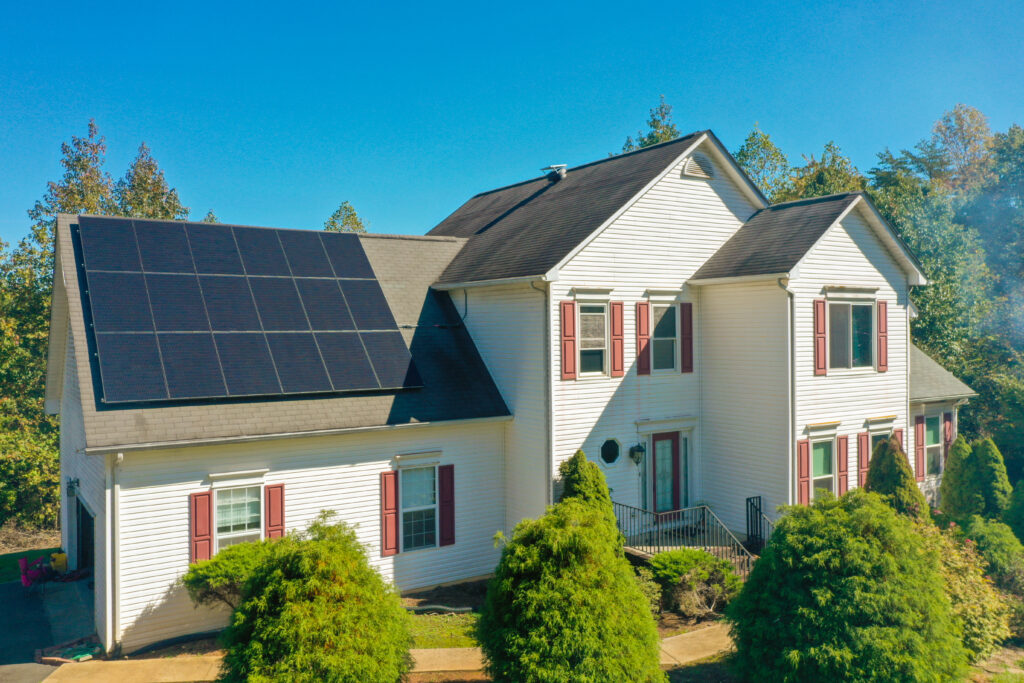
Roof leaks under solar panels
The array over the affected area has to come off to fix it properly. A leak under panels is rarely at the attachment, which is flashed it’s usually the field or a nearby valley, and you can’t diagnose it from a photo taken from the ground.
If the leak is isolated to one plane and the layout cooperates, a partial detach may be all you need. We’d rather pull one section than the whole system.
Attic fans, vents, and array layout
Small thing that causes big rework. When the roofing crew doesn’t know where the array is going back, vents and attic fans end up placed where a rail needs to run.
Our roofer has the layout before the first bundle hits the roof, so attic fans get reset, penetrations get planned around the racking, and nothing has to be relocated afterward.
If Earth Right didn't install your solar
We take these constantly. Most of the arrays we handle are somebody else’s work.
We warranty our own workmanship on the reattachment and the roof. We can’t stand behind equipment we didn’t install or spec. Once the array is off and we can see underneath, damaged wiring and corroded connectors turn up more often than not, and animals get into the gap under panels and chew both wire and roof. When we find it, we price it and show you.
Original solar company out of business? You’re not stuck. More on that on our solar side.
Service Area
Lynchburg · Forest · Bedford · Moneta · Rocky Mount · Roanoke · Salem · Daleville · Charlottesville · Staunton · Waynesboro · Fishersville · Blacksburg · Christiansburg
Get a Roof and Detach Quote in One Number
Frequently Asked Questions
The panels have to come off first. There's no way to tear off and reshingle a roof plane with modules and racking bolted to it. The array is detached, the roof is replaced, and the system goes back on the new roof.
The roof is priced normally on square footage, pitch, and material. The detach and reset adds $250 to $300 per panel, up to $350 for steep or complex arrays. Budget roughly $5,000 to $6,000 extra on a 20-panel system.
About two weeks when one company handles both. The array comes off a day or two ahead, the roof goes on, then we wait three to four days for the shingles to settle before reinstalling. Separate contractors typically add half a week to a week.
Having anyone other than your original installer service the array usually voids that installer's warranty. For most homeowners we work with, that company is no longer in business. Earth Right warranties its own workmanship on the reattachment.
Nothing gets left open. Roof attachments stay in place until the roofing crew tears off that section, and new flashing goes in the same day.
Yes, but the panels over the affected area have to come off to find and repair it properly. Leaks under an array are usually in the field or a nearby valley rather than at the flashed attachment. Depending on layout, a partial detach may be enough.
Ten years or less is ideal. On an older roof, expect a leak before the solar equipment warranty expires, which means dealing with an array on top of a roof repair.
The panels have to come off first. There’s no way to tear off and reshingle a roof plane with modules and racking bolted to it. The array is detached, the roof is replaced, and the system goes back on the new roof.
The roof is priced normally on square footage, pitch, and material. The detach and reset adds $250 to $300 per panel, up to $350 for steep or complex arrays. Budget roughly $5,000 to $6,000 extra on a 20-panel system.
About two weeks when one company handles both. The array comes off a day or two ahead, the roof goes on, then we wait three to four days for the shingles to settle before reinstalling. Separate contractors typically add half a week to a week.
Having anyone other than your original installer service the array usually voids that installer’s warranty. For most homeowners we work with, that company is no longer in business. Earth Right warranties its own workmanship on the reattachment.
Nothing gets left open. Roof attachments stay in place until the roofing crew tears off that section, and new flashing goes in the same day.
Yes, but the panels over the affected area have to come off to find and repair it properly. Leaks under an array are usually in the field or a nearby valley rather than at the flashed attachment. Depending on layout, a partial detach may be enough.
Ten years or less is ideal. On an older roof, expect a leak before the solar equipment warranty expires, which means dealing with an array on top of a roof repair.